

Rwanda defies expectations. This small East African nation, roughly the size of Maryland, has transformed from a country once synonymous with tragedy into one of Africa’s most inspiring success stories. Today, Rwanda stands as a beacon of conservation, community development, and sustainable tourism—a place where mountain gorillas thrive, cities gleam with cleanliness, and visitors experience Africa’s most organized, accessible safari experiences.
What makes Rwanda extraordinary isn’t just the wildlife, though the opportunity to spend an hour with mountain gorillas ranks among life’s most profound experiences. It’s the entire Rwanda experience: the rolling hills that earned its “Land of a Thousand Hills” nickname, the genuine warmth of Rwandan hospitality, the visible commitment to conservation and sustainability, and the powerful story of a nation that chose reconciliation and progress over revenge and division.
Rwanda offers three distinct safari experiences: mountain gorilla trekking in the Virunga volcanoes, Big Five wildlife viewing in the recently rehabilitated Akagera National Park, and chimpanzee tracking in the ancient Nyungwe Forest. Between these, you’ll discover a country that’s safe, clean, well-organized, and increasingly recognized as one of Africa’s premier safari destinations.
At Wazimba Travel, we’ve been operating East African safaris since 2017, and Rwanda holds a special place in our portfolio. While based in Nairobi, our deep regional connections and experience throughout East Africa ensure your Rwanda safari is seamlessly organized from gorilla permit procurement to lodge bookings to ground logistics. We understand what makes Rwanda unique and how to craft itineraries that honor both the wildlife and the remarkable human story.
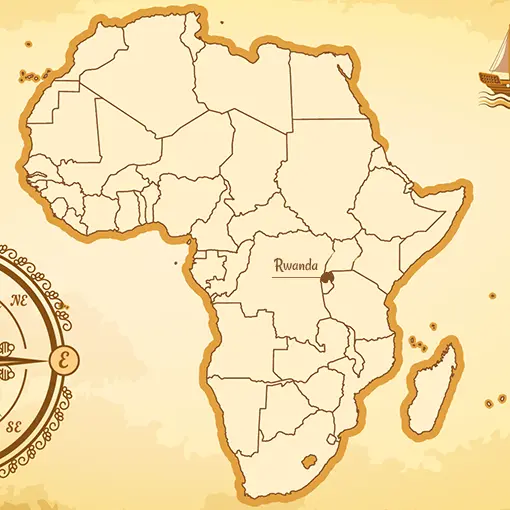
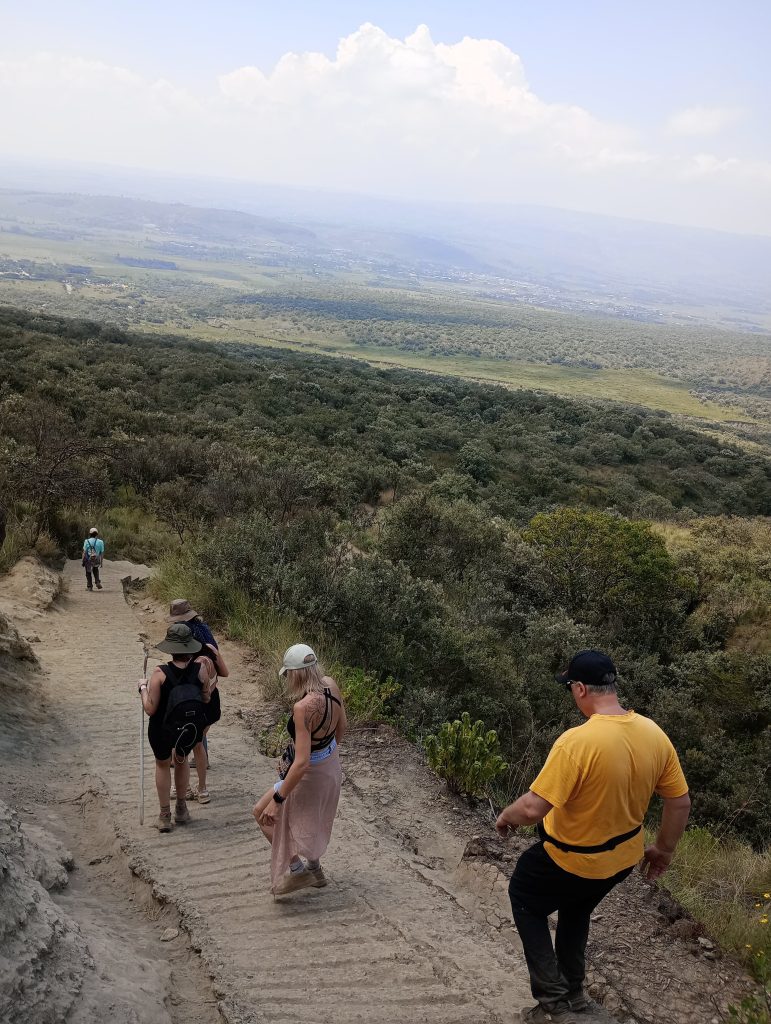

Rwanda revolutionized gorilla tourism by making it accessible, organized, and reliably excellent. Unlike the long drives required to reach Uganda’s Bwindi forest (8-10 hours from Kampala), Rwanda’s Volcanoes National Park sits just 2-3 hours from Kigali International Airport. You can literally fly into Kigali in the morning and trek gorillas the next day.
The trekking experience itself tends to be shorter and less strenuous than Uganda, though individual treks vary based on gorilla locations. Rwanda’s infrastructure—paved roads to park headquarters, well-maintained trails, professional briefings—creates a streamlined experience without sacrificing adventure or authenticity. For travelers with limited time, mobility considerations, or those wanting gorilla trekking without extensive wilderness camping, Rwanda delivers perfectly.
Rwanda’s commitment to conservation extends beyond protecting charismatic megafauna. The country banned plastic bags in 2008 (before most developed nations), dedicates significant resources to anti-poaching efforts, and channels substantial tourism revenue to community development projects. The result? Mountain gorilla populations have grown from approximately 480 individuals in 2010 to over 600 today.
Akagera National Park exemplifies Rwanda’s conservation ambition. Once decimated by cattle grazing and poaching, Akagera has been rehabilitated through a partnership between the Rwanda Development Board and African Parks. Lions were reintroduced in 2015, black rhinos in 2017—making Akagera Rwanda’s only Big Five destination. This successful rewilding demonstrates what’s possible when conservation receives proper investment and community support.
Rwanda consistently ranks as one of Africa’s safest countries for travelers. Kigali is exceptionally clean—famously so—with plastic bags banned and monthly community cleanup days (Umuganda) seeing citizens nationwide cleaning streets and public spaces. Traffic police are professional, roads are well-maintained, and tourism infrastructure meets international standards.
This organization extends to safari experiences. Gorilla trekking follows precise protocols, guides are highly trained, and logistics run smoothly. For first-time Africa visitors or those who appreciate well-organized travel, Rwanda provides comfort without compromising authenticity.
No visit to Rwanda is complete without understanding its recent history. The 1994 genocide against the Tutsi, where approximately one million people were killed in 100 days, represents one of modern history’s darkest chapters. Yet Rwanda’s response—choosing reconciliation over revenge, unity over division—offers profound lessons about human resilience and possibility.
The Kigali Genocide Memorial provides essential context for understanding modern Rwanda. It’s emotionally challenging but important, offering respectful, educational exploration of the genocide’s causes, progression, and aftermath. Many visitors find this experience deeply moving and consider it crucial for appreciating Rwanda’s remarkable transformation.
Rwanda has positioned itself as East Africa’s luxury safari destination. While budget options exist, Rwanda excels in high-end experiences. Lodges like Bisate Lodge, One&Only Gorilla’s Nest, Wilderness Safaris’ Bisate, and Singita Kwitonda offer world-class luxury with sustainability at their core—solar power, community employment, conservation funding, and architectural designs that minimize environmental impact while maximizing comfort and views.
The luxury extends beyond accommodations. Private gorilla trekking experiences, helicopter transfers, exclusive conservancy access, and personalized service create safari experiences that rival anywhere globally.
Volcanoes National Park protects the Rwandan portion of the Virunga Massif, a chain of eight volcanic peaks shared with Uganda and the Democratic Republic of Congo. This dramatic landscape of steep-sided volcanoes, some still active, creates one of Africa’s most distinctive mountain ranges.
The park gained international fame through Dian Fossey, the American primatologist who studied mountain gorillas here from 1967 until her murder in 1985. Her work, chronicled in the book and film “Gorillas in the Mist,” brought global attention to mountain gorillas’ plight and established the foundation for modern gorilla conservation. Fossey’s grave, located between the volcanoes near her research camp (Karisoke), can be visited on the Dian Fossey hike—a challenging but rewarding trek for those interested in gorilla conservation history.
Today, Volcanoes National Park hosts 12 habituated gorilla families available for tourism, plus additional families reserved for research. Each family can receive eight visitors daily, creating limited but precious opportunities for gorilla encounters. The park’s elevation (2,500-4,507 meters) means cool temperatures year-round—bring warm layers even during dry seasons.
Beyond gorillas, Volcanoes National Park offers golden monkey tracking. These rare primates, found only in the Virunga highlands, display striking gold-orange fur against black limbs. They’re more active and playful than gorillas, bouncing through bamboo forests and feeding on bamboo shoots. Golden monkey tracking costs significantly less than gorilla permits ($100 vs $1,500) and makes an excellent addition to Rwanda itineraries.
The five volcanoes visible from Rwanda—Karisimbi (4,507m, the highest), Bisoke (3,711m), Sabyinyo (3,669m), Gahinga (3,474m), and Muhabura (4,127m)—create spectacular backdrops for gorilla encounters. Each volcano can be climbed, with Mount Bisoke’s crater lake being particularly popular for day hikes. These volcanic landscapes, often shrouded in mist, create otherworldly atmospheres that enhance the already magical gorilla experience.
Akagera National Park, protecting 1,122 square kilometers along Rwanda’s eastern border with Tanzania, represents one of Africa’s great conservation comebacks. Named after the Kagera River that feeds into Lake Victoria, Akagera combines savannah plains, wetlands, lakes, and mountains into a diverse ecosystem.
The park’s history reflects Rwanda’s broader trajectory. Civil war and the genocide’s aftermath saw Akagera’s area reduced by two-thirds, with land allocated to returning refugees for resettlement. Wildlife populations plummeted due to poaching. By the early 2000s, lions and rhinos had been eliminated entirely.
In 2010, African Parks assumed management in partnership with the Rwanda Development Board. The transformation since has been remarkable. Anti-poaching measures, community engagement, and active wildlife management have revived Akagera. Lions were reintroduced from South Africa in 2015—seven individuals that have since established territories and reproduced successfully. Black rhinos arrived in 2017 from South Africa, making Akagera Rwanda’s only Big Five park.
Today, Akagera delivers excellent wildlife viewing in stunning landscapes. Game drives reveal elephants, buffalos, zebras, giraffes (Masai subspecies), numerous antelope species including topi and roan antelope, and increasingly frequent lion and leopard sightings. The park’s lakes host massive hippo populations and thousands of crocodiles. Boat safaris on Lake Ihema offer different perspectives—hippos yawning from the water, crocodiles sunning on banks, and spectacular birdlife including African fish eagles, sacred ibis, and countless waterbirds.
Akagera’s rehabilitation demonstrates Rwanda’s conservation commitment extending beyond famous mountain gorillas. The park proves that degraded ecosystems can recover when given proper protection, resources, and community support. For visitors, Akagera provides traditional East African safari experiences—open savannah, abundant wildlife, stunning sunrises and sunsets—all within Rwanda’s safe, well-organized framework.

Nyungwe Forest National Park protects one of Africa’s oldest montane rainforests—a 970-square-kilometer wilderness of dense forest, swamps, grasslands, and bamboo covering steep mountains in southwestern Rwanda. This ancient forest, which survived the last ice age, hosts extraordinary biodiversity: 13 primate species, 310 bird species (27 Albertine Rift endemics), 1,068 plant species, 85 mammal species, and countless insects.
Chimpanzee tracking is Nyungwe’s premier activity. The forest shelters approximately 500 chimpanzees, with two communities habituated for tourism. Morning tracking begins early (5:00 AM starts are common) as trackers follow chimp calls through the forest. Success rates are high—around 90%—and watching chimpanzees in the wild reveals behaviors remarkably similar to humans: tool use, complex social interactions, cooperative hunting, and emotional expressions from joy to anger.
Beyond chimps, Nyungwe hosts other primates including the Ruwenzori colobus (troops sometimes numbering 300+ individuals—among the largest primate groups in Africa), L’Hoest’s monkeys, silver monkeys, golden monkeys, and several nocturnal species. The diversity means almost every forest walk produces primate sightings.
The Canopy Walkway, suspended 50 meters above the forest floor and spanning 160 meters, offers unique perspectives of Nyungwe’s forest ecosystem. Walking among the treetops, you’re eye-level with canopy-dwelling birds and primates, with views extending across the forest to distant mountains. It’s one of only three canopy walkways in East Africa.
Nyungwe appeals particularly to birders. The 27 Albertine Rift endemic species found here include the Ruwenzori turaco, Grauer’s rush warbler, and red-collared mountain babbler. Hundreds of other species—from tiny sunbirds to impressive great blue turacos—make Nyungwe a birding paradise.
The forest’s beauty and biodiversity come with challenges: steep terrain, high rainfall (even during “dry” seasons), and serious hiking required for most activities. Nyungwe suits physically fit travelers who appreciate pristine wilderness and don’t mind getting muddy. The rewards—incredible primate diversity, rare birds, and ancient forest atmospheres—justify the effort.
Kigali, Rwanda’s capital and largest city, surprises most visitors. This is not the stereotypical chaotic African city but a clean, organized, safe capital that functions efficiently. Hills define Kigali’s geography—the city sprawls across multiple ridges with valleys between, creating neighborhoods with distinct characters and spectacular views.
The Kigali Genocide Memorial is Kigali’s most important visit. This memorial and museum documents the 1994 genocide through survivor testimonies, historical context, photographs, and artifacts. It’s emotionally intense but essential for understanding Rwanda’s journey from devastation to reconciliation. The memorial’s gardens contain mass graves where over 250,000 genocide victims rest.
Beyond the memorial, Kigali offers vibrant markets (Kimironko Market for crafts and produce), excellent restaurants serving both Rwandan and international cuisine, growing arts scenes, and comfortable hotels. The city makes an excellent introduction to Rwanda—spend a day or two acclimatizing, visiting the memorial, and enjoying urban Rwanda before heading to parks.


Lake Kivu, one of Africa’s Great Lakes, forms Rwanda’s western border with the Democratic Republic of Congo. This 2,700-square-kilometer lake offers beach relaxation, island exploration, kayaking, and stunning sunset views—a perfect safari conclusion after active gorilla trekking and game drives.
The lakeside towns of Gisenyi (north) and Kibuye (central) provide resort-style accommodations, water sports, and peaceful atmospheres. Lake Kivu’s fresh water (no hippos or crocodiles, unlike most African lakes) allows safe swimming, making it popular with Rwandans and tourists seeking beach relaxation without ocean travel.
Coffee plantations surround Lake Kivu, and several lodges offer coffee tours where you’ll learn about Rwanda’s growing coffee industry, from bean to cup. Rwanda’s high-altitude arabica coffee has gained international recognition for quality—coffee tours add cultural depth to lakeside relaxation.
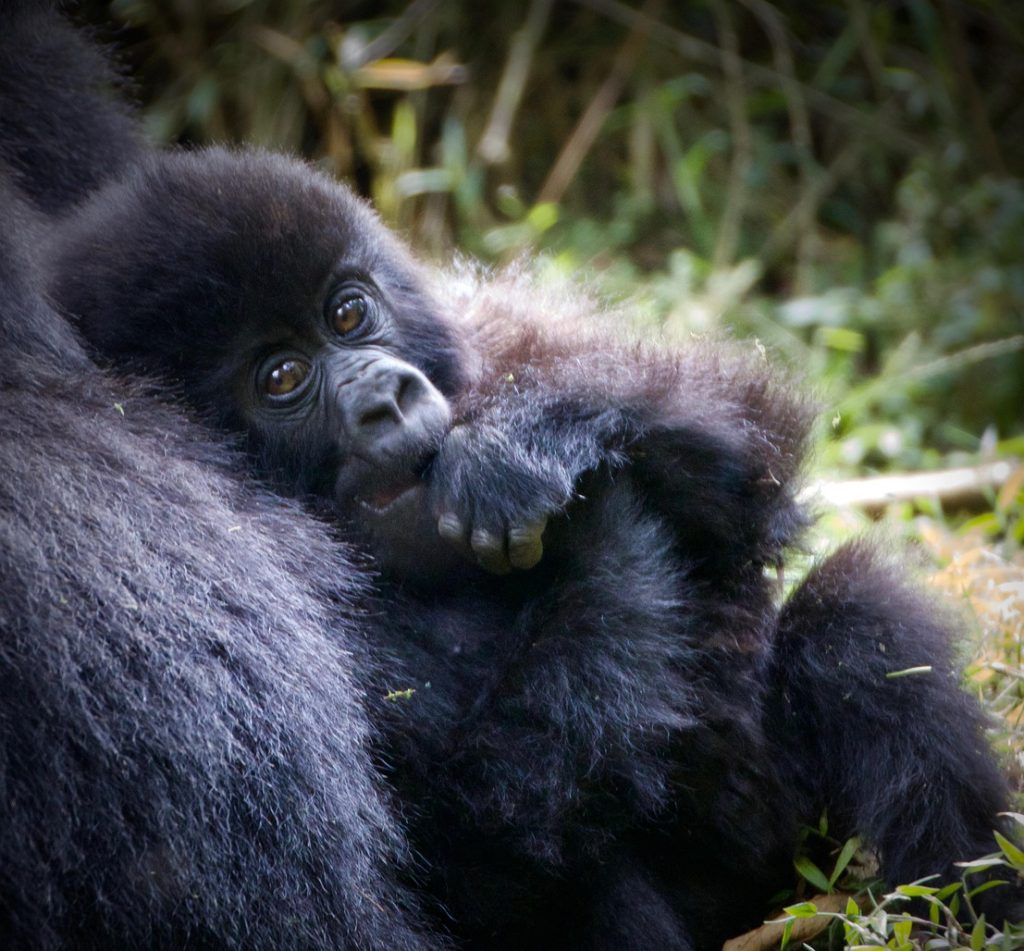
Mountain gorillas represent Rwanda’s wildlife crown jewel. These magnificent primates, our close evolutionary cousins sharing 98.3% of our DNA, live only in the Virunga Massif and Uganda’s Bwindi Forest. Approximately 1,070 mountain gorillas remain worldwide, making every encounter precious.
Gorilla families are matriarchal societies led by dominant silverbacks—mature males whose distinctive silver-gray back hair develops around age 12. Silverbacks can weigh 200+ kilograms and stand nearly 2 meters tall. Despite their imposing size and strength, silverbacks are remarkably gentle, patiently tolerating young gorillas’ playful antics and protecting their families with impressive yet usually non-violent displays.
Watching gorilla families reveals complex social dynamics and behaviors eerily similar to humans. Mothers carefully cradle infants, juveniles wrestle and chase each other, subordinate males test boundaries, and the silverback maintains order through presence rather than aggression. You might observe grooming sessions (social bonding), feeding behavior (gorillas spend most of their day eating vegetation), or the gentle way adults interact with youngsters.
The hour you spend with gorillas passes quickly yet leaves lasting impressions. Something profound happens when you make eye contact with a mountain gorilla—recognition of shared intelligence, emotion, and evolutionary heritage that transcends species boundaries. Many visitors describe gorilla encounters as life-changing experiences that fundamentally shift their perspectives on wildlife, conservation, and humanity’s place in nature.
Golden monkeys, found only in the Virunga highlands, display gorgeous coloration—bright orange-gold fur contrasting with black faces, limbs, and tails. These endangered primates live in large troops (sometimes 80+ individuals) in bamboo forests between 2,500-4,000 meters elevation.
Unlike gorillas’ calm demeanor, golden monkeys are energetic and acrobatic. They bounce through bamboo stands, leap between trees, and rarely sit still. Watching them requires looking up—they prefer staying in trees and are most active in early morning and late afternoon when feeding on bamboo shoots, fruits, and insects.
Golden monkey tracking offers excellent value ($100 vs $1,500 for gorillas) and makes a perfect addition to Rwanda itineraries, especially for visitors spending multiple days near Volcanoes National Park.
Akagera National Park now protects all of Africa’s Big Five, though in more modest numbers than Kenya or Tanzania’s famous parks:
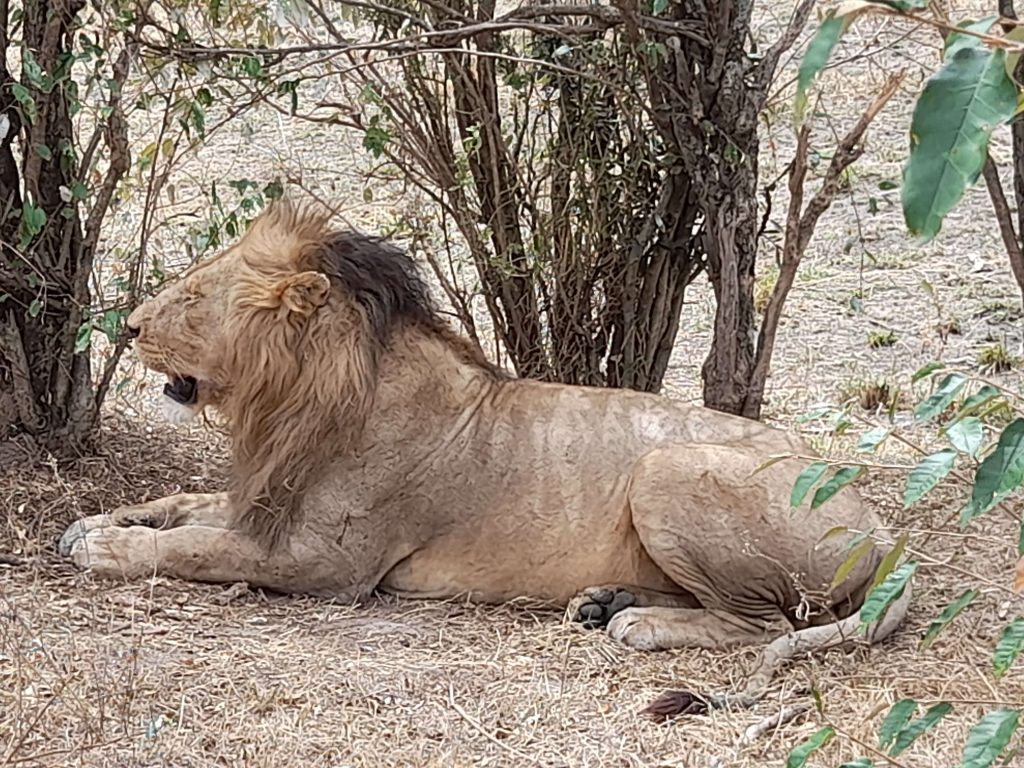
Approximately 40+ lions now inhabit Akagera following 2015 reintroductions. The pride has established territories and reproduced successfully. Sightings have increased as lions grow habituated to vehicles, though spotting remains less reliable than in Kenya’s Masai Mara.
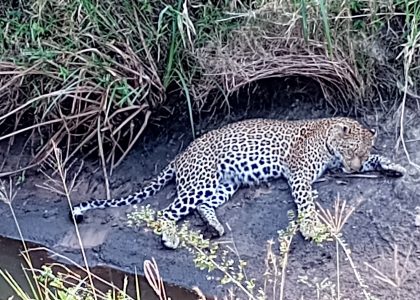
These elusive cats have always inhabited Akagera. Night drives significantly increase spotting chances, as leopards are primarily nocturnal. Akagera’s combination of savannah and woodland provides ideal leopard habitat.
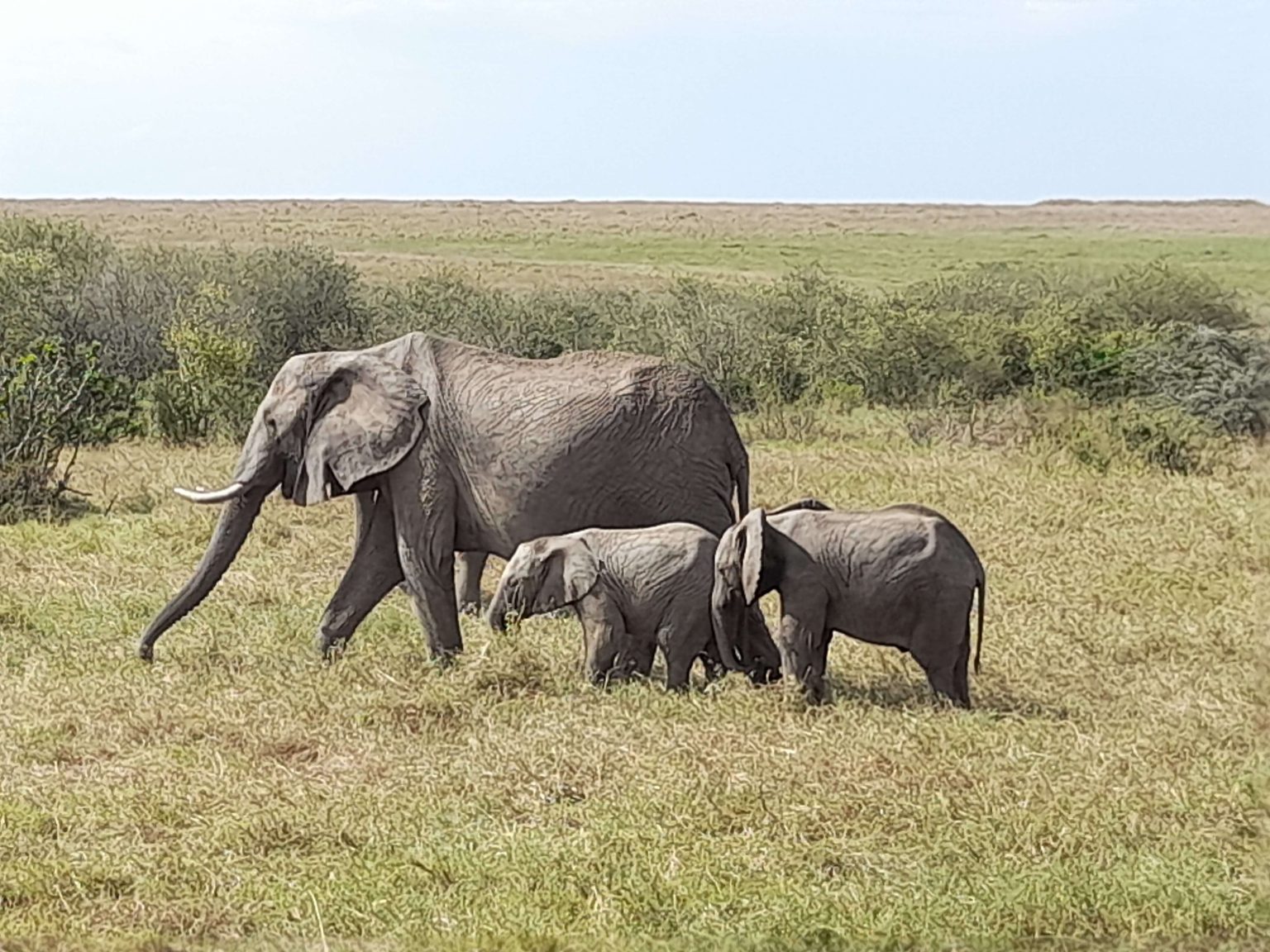
Akagera hosts a growing elephant population of 100+ individuals. These elephants tend to be shy due to historical poaching pressure, but sightings are increasingly common, particularly during dry seasons when they concentrate near water sources.
Large herds numbering hundreds graze Akagera’s plains. Buffalo are abundant and easily spotted, particularly in northern savannah areas.
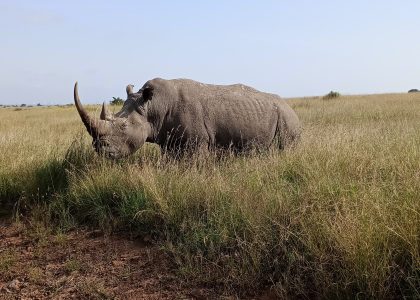
The 2017 reintroduction brought 18 black rhinos from South Africa. These individuals and their offspring now roam Akagera’s northern sector. Rhino tracking (separate activity requiring advance booking) offers opportunities to approach these prehistoric-looking megaherbivores with armed rangers.
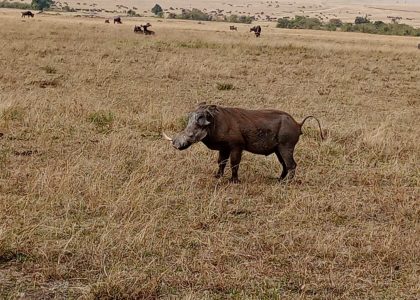
Beyond the Big Five, Akagera hosts zebras, giraffes, numerous antelope species (impala, topi, roan antelope, bushbuck, waterbuck, eland), hippos, crocodiles, hyenas, jackals, and increasingly, wild dogs (a pack was reintroduced in 2024).
Chimpanzees: Our closest living relatives after bonobos, chimpanzees share 98.7% of our DNA. Nyungwe’s 500+ chimps live in communities with complex social hierarchies. Watching them reveals remarkable intelligence: tool use (sticks for fishing termites, rocks for cracking nuts), cooperative hunting, cultural transmission of learned behaviors, and emotional expressions from joy to grief.
Ruwenzori Colobus: These black-and-white primates form some of Africa’s largest monkey troops—groups of 300+ individuals have been recorded. Their flowing white capes and acrobatic leaps through the canopy create spectacular viewing.
L’Hoest’s Monkeys: Ground-dwelling and shy, these forest specialists are rarely seen elsewhere in East Africa. Nyungwe offers excellent chances to observe them.
Other Primates: Silver monkeys, red-tailed monkeys, Dent’s mona monkeys, grey-cheeked mangabeys, olive baboons, and three species of nocturnal galagos complete Nyungwe’s primate diversity.
Rwanda records over 700 bird species, impressive for its small size. Nyungwe Forest’s 310 species include 27 Albertine Rift endemics found nowhere else. Akagera hosts over 480 species, from massive shoebills in wetlands to colorful kingfishers and bee-eaters. Volcanoes National Park, despite its high altitude, records 200+ species including several Albertine endemics.
The grey crowned crane, Rwanda’s national bird, can be seen in Akagera’s wetlands and occasionally in cultivated areas. Other highlights include African fish eagles, martial eagles, sacred ibis, numerous sunbirds, turacos, and countless others.
Rwanda’s high elevation (Kigali sits at 1,567 meters) creates a temperate climate with comfortable temperatures year-round. However, distinct wet and dry seasons influence safari experiences.
June to September represents Rwanda’s primary dry season and peak tourist period. This season offers:
Peak season brings more visitors and higher lodge prices. Gorilla permits sell out months in advance—book 6+ months ahead for June-September travel. Akagera sees more vehicles, though crowds remain minimal compared to Kenya or Tanzania parks.
December to February offers Rwanda’s second dry season. Conditions mirror June-September but with fewer tourists and often lower prices (except December holidays). This shoulder season provides excellent value while maintaining good weather and wildlife viewing.
March to May brings Rwanda’s long rains. April typically sees the heaviest rainfall, though patterns vary. Wet season characteristics include:
Mornings often dawn clear before afternoon showers. With proper rain gear and expectations, wet season offers remarkable value and beauty. Wildlife remains present—animals don’t migrate in Rwanda—though dense vegetation makes spotting more challenging in Nyungwe’s forests.
October to November marks the short rains. Rainfall is less intense than March-May, and this shoulder season often provides excellent conditions at lower prices than peak season.
Gorilla Trekking: June-September and December-February offer easiest trekking. However, gorillas can be tracked year-round, and wet season’s advantages (fewer visitors, lower prices, available permits) appeal to budget-conscious and flexible travelers.
Akagera Safari: Dry seasons concentrate wildlife around water sources, improving game viewing. However, Akagera functions well year-round, with wet season’s green landscapes creating beautiful photography backdrops.
Nyungwe Chimpanzees: Year-round activity with high success rates regardless of season. Wet season sees chimps feeding on seasonal fruits, creating more animated viewing.
Birding: November-April brings migratory species, increasing diversity. However, resident species ensure excellent birding any month.
Photography: Dry seasons offer clear skies and easy trekking. Wet seasons provide dramatic lighting, lush green landscapes, and fewer tourists obstructing shots—photographer preferences vary.
2-3 Days: Gorilla trekking focus with Kigali visit. This minimal duration suits travelers adding Rwanda to Uganda or Kenya itineraries, or those with limited time wanting one specific experience.
4-5 Days: Gorillas plus one additional experience (Akagera safari, Nyungwe chimps, or Lake Kivu relaxation). This duration provides balanced Rwanda introduction without rushing.
6-7 Days: Comprehensive Rwanda experience including gorillas, Akagera safari, and Nyungwe chimps or Lake Kivu. This timeframe showcases Rwanda’s diversity—primates, Big Five, forest, savannah, and lake ecosystems.
8+ Days: In-depth Rwanda exploration or combining Rwanda with Uganda (gorilla trekking in both countries) or Kenya (primate tracking plus savannah safari). Extended time allows relaxed pacing, multiple activities, and full immersion in Rwanda’s remarkable transformation story.
Kigali International Airport receives flights from multiple African hubs (Nairobi, Addis Ababa, Johannesburg, Entebbe) and some European cities (Brussels, Qatar via Doha). RwandAir, the national carrier, has expanded significantly, improving Rwanda’s accessibility.
From Kigali to major destinations:
Rwanda’s roads are excellent by African standards—paved, well-maintained, and regularly improved. The scenic drives themselves reward, with Rwanda’s hills creating beautiful landscapes throughout the journey.
Helicopter transfers between destinations offer luxury time-saving options. Some high-end operators include helicopter flights as standard, dramatically reducing transfer times while providing aerial perspectives of Rwanda’s stunning topography.
Rwanda Gorilla Permit Cost: $1,500 per person per trek (as of 2024)
Rwanda’s gorilla permits cost significantly more than Uganda’s ($800) but offer advantages:
Permits must be booked well in advance—6-12 months for peak season (June-September, December-February). Each permit allows one hour with gorillas. Only eight people visit each family daily, limiting availability.
Gorilla Trekking Age Minimum: 15 years (strictly enforced)
Wazimba Travel handles all permit arrangements, securing them as soon as you confirm dates. Permits are non-refundable if canceled (making travel insurance essential), but can sometimes be transferred to others or different dates if circumstances change.
Yellow Fever: Not required for direct entry to Rwanda from most countries. However, if traveling from or through yellow fever risk countries (including Kenya and Uganda), yellow fever vaccination certificate is mandatory.
Malaria: Kigali and high-altitude areas (Volcanoes NP, Nyungwe) have minimal risk. Akagera requires malaria prophylaxis. Consult travel medicine specialists for personalized advice.
Fitness for Gorilla Trekking: Moderate fitness required. Rwanda’s treks average 1-4 hours but can extend longer if gorillas move far. Trails are steep and can be muddy. Porters are available ($20) and recommended—they carry packs, assist on difficult sections, and provide income to local communities.
Safety: Rwanda is one of Africa’s safest countries. Crime rates are low, even in Kigali. Standard urban precautions apply in cities, but violent crime targeting tourists is extremely rare. Political stability is strong, though northern border areas near DRC should be avoided unless on organized tours.
For Gorilla Trekking:
For Safari Game Drives:
General Items:
Rwanda positions itself as East Africa’s luxury safari destination, though budget and mid-range options exist.
Budget safari options in Rwanda are limited compared to Kenya or Uganda. Basic guesthouses near parks exist, but Rwanda lacks the extensive budget camping infrastructure found elsewhere. Budget travelers typically:
Mid-range Rwanda safaris provide good comfort at reasonable prices. Lodges include Mountain Gorilla View Lodge, Le Bambou Gorilla Lodge, Emeraude Kivu Resort, and several Akagera properties. Expect clean rooms, good food, en-suite bathrooms, and attractive locations, though without luxury’s finishing touches.
Rwanda’s luxury lodges rival anywhere globally. Properties blend contemporary design with environmental sensitivity—solar power, water conservation, local materials, and community partnerships. Locations maximize views of volcanoes or savannah landscapes. Service is exceptional, anticipating needs before guests recognize them.
Bespoke Rwanda safaris offer complete customization: helicopter transfers between parks, private gorilla trekking experiences, exclusive conservancy access, and personalized itineraries meeting any request.
What’s Typically Included:
What’s Additional:
Wazimba Travel works directly with Rwanda lodges, guides, and ground operators, eliminating international middlemen. Our East African expertise ensures your Rwanda safari is properly planned, permits secured, and logistics run smoothly.
East African Regional Expertise: Based in Nairobi with operations throughout East Africa since 2017, we understand Rwanda’s position within the broader region. We seamlessly combine Rwanda with Kenya or Uganda, handle multi-country logistics, and leverage regional connections for better pricing and service.
Gorilla Permit Management: Rwanda’s $1,500 permits are significant investments requiring careful planning. We secure permits as soon as you confirm dates, advise on optimal timing, and handle all coordination with Rwanda Development Board and park authorities.
Honest Expectations: We’ll tell you truthfully whether Rwanda or Uganda better suits your budget, fitness level, and travel style. Sometimes Uganda’s lower permit costs and longer treks suit better; other times Rwanda’s accessibility and streamlined experience is ideal. We recommend what’s right for YOU.
Flexible Itineraries: Standard packages provide starting points, but we customize everything. Interested in spending extra time in Nyungwe? Want to add Rwanda genocide memorial visits? Prefer luxury throughout or mixing accommodation levels? We adapt to your preferences and budget.
Value Through Direct Relationships: Working directly with Rwandan operators without markup chains means better value. You’ll stay in the same lodges as travelers who paid more—you just booked intelligently through local experts.
Comprehensive East African Planning: Rwanda works beautifully combined with Kenya safaris or Uganda gorilla trekking. Our regional expertise creates seamless multi-country adventures handling different park systems, border crossings, and varied logistics.
Perfect for: Gorilla focus with minimal time Highlights: Mountain gorilla encounter, Kigali memorial
Day 1: Arrive Kigali, visit Genocide Memorial, overnight Kigali Day 2: Drive to Volcanoes NP (2-3 hours), afternoon relaxation, overnight near park Day 3: Morning gorilla trekking, afternoon return to Kigali, evening departure
This condensed itinerary maximizes gorilla time while minimizing travel days. Perfect for adding to Kenya or Uganda safaris, or for time-constrained travelers wanting this specific experience.
Perfect for: First-time Rwanda visitors wanting diversity Highlights: Gorillas, Big Five safari, cultural experiences
Day 1: Arrive Kigali, city tour and Genocide Memorial Day 2: Drive to Akagera (2.5 hours), afternoon game drive Day 3: Full day Akagera: morning game drive, afternoon boat safari on Lake Ihema Day 4: Drive to Volcanoes NP (4-5 hours), afternoon relaxation Day 5: Morning gorilla trekking, afternoon return to Kigali
This itinerary balances primates with traditional safari, showcasing Rwanda’s diversity in under a week.
Perfect for: Comprehensive Rwanda experience Highlights: All major parks, multiple primate species, cultural depth
Day 1: Arrive Kigali, Genocide Memorial, overnight Kigali Day 2: Drive to Nyungwe Forest (5-6 hours) Day 3: Morning chimpanzee tracking, afternoon canopy walkway Day 4: Drive to Lake Kivu (2 hours), relaxation and water activities Day 5: Drive to Volcanoes NP (3 hours), village walk or second activity Day 6: Morning gorilla trekking, afternoon golden monkey tracking or Dian Fossey hike Day 7: Morning at leisure, drive to Kigali (2-3 hours), evening departure
This week-long safari covers all major Rwanda experiences at comfortable pace without excessive driving.
Perfect for: Gorilla enthusiasts wanting comparisons Highlights: Gorilla trekking in both countries, diverse ecosystems
Day 1: Arrive Kigali, Genocide Memorial Day 2: Volcanoes NP gorilla trekking Day 3: Golden monkey tracking, drive to Uganda border, Bwindi Day 4: Bwindi gorilla trekking (Uganda) Day 5: Transfer to Queen Elizabeth NP (4 hours) Day 6: Queen Elizabeth safari: game drives and Kazinga boat cruise Day 7: Morning game drive, transfer to Kibale (3 hours) Day 8: Kibale chimpanzee tracking Day 9: Return to Kigali via Uganda-Rwanda border, evening departure
This combination allows gorilla trekking in both Rwanda and Uganda, comparing experiences while adding Ugandan wildlife and chimps.
Perfect for: Primates plus classic savannah safari Highlights: Mountain gorillas, Masai Mara migration, diverse ecosystems
Days 1-4: Rwanda (Kigali, Volcanoes NP gorilla trekking, Akagera safari) Day 5: Fly Kigali to Nairobi Days 6-9: Kenya (Masai Mara for Great Migration, game drives, Mara River crossings) Day 10: Return to Nairobi, departure
This combination contrasts Rwanda’s intimate mountain gorilla experiences with Kenya’s vast savannah spectacles and abundant wildlife.
Yes, Rwanda is one of Africa’s safest countries. Crime rates are low, even in Kigali. The government prioritizes tourist safety, and violent crime targeting visitors is extremely rare. Standard urban precautions apply (don’t display valuables, stay aware of surroundings), but safety concerns shouldn’t deter Rwanda travel.
Rwanda’s $1,500 permits (vs Uganda’s $800) reflect deliberate luxury positioning and conservation funding. The higher price limits visitor numbers (protecting gorillas), generates substantial conservation revenue, and positions Rwanda as a premium destination. The price also reflects easier accessibility (shorter drives from Kigali) and typically shorter, less strenuous treks than Uganda.
Choose Rwanda if: You have limited time (Volcanoes NP is 2-3 hours from Kigali vs 8-10 hours from Kampala to Bwindi), prefer shorter/less strenuous treks, want luxury accommodations and streamlined logistics, or budget allows the higher permit cost.
Choose Uganda if: Budget is primary concern ($800 vs $1,500), you prefer more adventurous/remote experiences, want to combine with other Uganda parks (Queen Elizabeth, Murchison Falls, Kibale chimps), or appreciate longer treks through dense forest.
Both offer incredible, life-changing gorilla encounters. The difference is accessibility, price, and overall experience rather than the gorillas themselves.
Minimum age is 15 years, strictly enforced. This protects both children and gorillas—treks can be challenging, and gorillas are susceptible to human diseases. Families with younger children can enjoy Akagera safari, Lake Kivu activities, and cultural experiences while older family members trek gorillas.
Rwanda’s treks are generally shorter and less strenuous than Uganda’s, though individual experiences vary widely (1-6+ hours depending on gorilla locations). Terrain is steep and can be muddy. Moderate fitness is required—if you can hike 2-3 hours on uneven terrain with breaks, you can handle it. Porters ($20) are available and recommended for carrying packs and assisting on difficult sections.
For easiest conditions: June-September and December-February (dry seasons, less mud, best game viewing in Akagera) For value and availability: March-May and October-November (wet seasons, lower prices, fewer tourists, available permits) For photography: March-May (green season, dramatic lighting, lush landscapes) For birding: November-April (migratory species present)
Rwanda functions well year-round—choose based on priorities (budget vs ease, crowds vs solitude, photography preferences).
Absolutely. While Akagera doesn’t rival Serengeti or Masai Mara’s wildlife densities, it offers rewarding safari experiences with growing populations and recent Big Five completion (lions 2015, black rhinos 2017). The park’s rehabilitation story is inspiring, landscapes are beautiful, and it provides traditional safari experiences within Rwanda’s safe, organized framework. Akagera works excellently as an add-on to gorilla trekking for comprehensive Rwanda experiences.
Most nationalities can obtain visas online ($50) before travel or on arrival at Kigali airport. The East African Tourist Visa ($100) covers Rwanda, Kenya, and Uganda for multiple entries over 90 days—excellent value for multi-country itineraries. Processing is straightforward and efficient.
Yes. The Kigali Genocide Memorial is professionally designed for educational visits, with respectful displays, survivor testimonies, and historical context. Photography is restricted in certain areas, modest dress is required, and visitors should maintain appropriate solemnity. Many visitors find memorial visits emotionally challenging but crucial for understanding Rwanda’s journey and remarkable transformation. Consider visiting early in your trip to contextualize the modern Rwanda you’ll experience.
Essential items:
Absolutely—this is Wazimba Travel’s specialty. Rwanda combines beautifully with:
Multi-country itineraries showcase East Africa’s incredible diversity. We handle all border crossings, varying park systems, and complex logistics seamlessly.
Rwanda’s conservation model integrates wildlife protection with community development, recognizing that conservation succeeds only when local people benefit tangibly from protected areas.
Ten percent of gorilla permit revenue goes directly to community projects near Volcanoes National Park. These funds have built schools, health clinics, water systems, and roads, while supporting income-generating projects. Communities that once viewed gorillas as competition for land now see them as valuable assets worth protecting.
Near Volcanoes National Park, the Iby’iwacu Cultural Village provides employment and income to former poachers who’ve transitioned to tourism. Visitors learn about traditional Rwandan culture—homestead construction, traditional medicine, banana beer brewing, archery, and dance—while directly supporting rehabilitation and community development.
Akagera National Park employs locals as rangers, guides, and support staff. The park contracts with nearby communities for services and has established scholarship programs for local children. Anti-poaching success depends on community cooperation—when locals benefit economically from wildlife, poaching decreases.
When you choose responsible operators like Wazimba Travel, your Rwanda safari creates positive impacts:
Tourism has become Rwanda’s largest foreign exchange earner, proving that living wildlife generates more value than dead wildlife ever could.
Rwanda awaits with its mountain gorillas, volcanic landscapes, remarkable transformation story, and welcoming people. Whether you’re dreaming of that profound hour with gorilla families, seeking Big Five wildlife in rehabilitated Akagera, tracking chimpanzees through ancient Nyungwe forests, or experiencing Africa’s most organized and accessible safari destination, Rwanda delivers beyond expectations.
At Wazimba Travel, we’ve been operating East African safaris since 2017, and Rwanda features prominently in our portfolio. Our regional expertise, direct Rwanda relationships, and personalized service ensure your safari exceeds expectations while respecting your budget. We handle everything—gorilla permits, logistics, accommodations, and activities—so you focus on the experience.
Ready to start planning? Contact us today for a free consultation and custom itinerary. Tell us about your dream Rwanda safari—interests, dates, fitness level, budget, preferences for combining with Kenya or Uganda—and we’ll craft a personalized adventure designed just for you.
Contact Wazimba Travel:
Your East African adventure begins here. Let’s create memories that last a lifetime.
Since 2017, Wazimba Travel has been crafting authentic East African safari experiences. As a locally-owned operator with deep regional connections, we combine intimate knowledge with personalized service to create safaris that exceed expectations. Browse our Rwanda safari packages, read our East African travel blog, or contact us directly to start planning your Rwanda gorilla trekking and wildlife adventure.
☏ Call/WhatsApp: +254-110-525-484 +254-720-809-041
✉ Email: info@wazimbatravel.com
⌚ Response time: Within 24 hours

